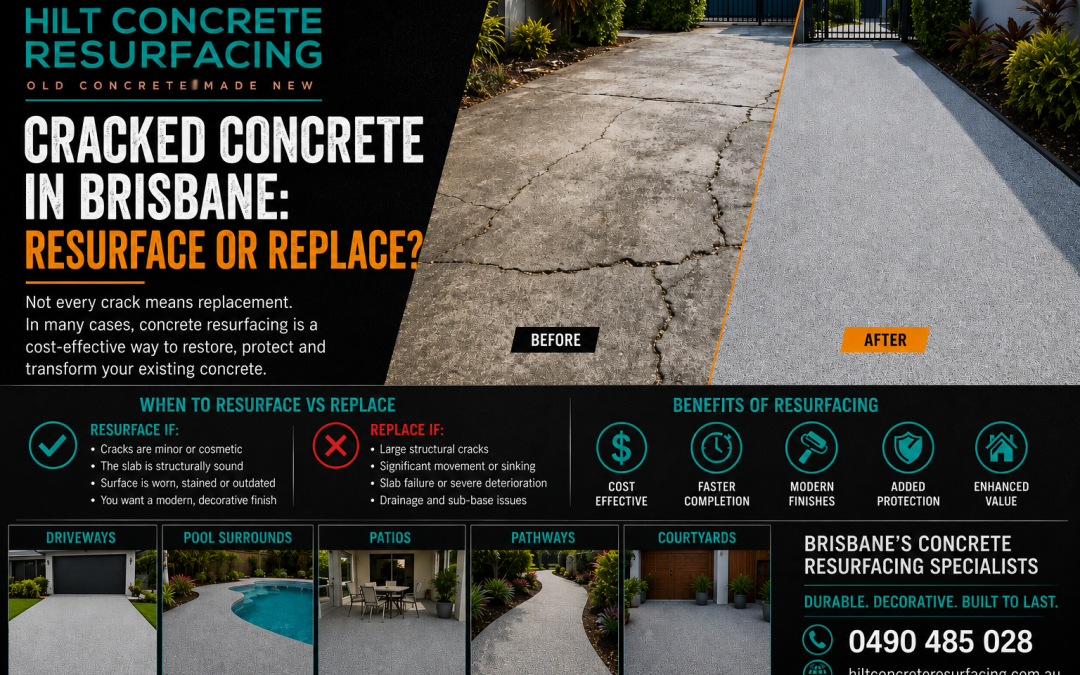
Not every cracked driveway, patio or pathway needs to be ripped out and replaced. In many Brisbane homes, concrete can be professionally repaired and resurfaced to restore the look, improve durability and extend the life of the slab. The key is understanding whether the cracking is only on the surface or whether it points to a deeper structural problem.
What causes concrete to crack?
Concrete can crack for several reasons. Some cracks are cosmetic and happen naturally as the surface ages, while others are a sign that the slab has moved or the base underneath has failed.
- Shrinkage during curing
- Heavy traffic and long-term wear
- Ground movement or poor preparation under the slab
- Tree roots or drainage issues
- Heat, moisture and seasonal expansion
The right solution depends on what is causing the crack, how wide it is and whether the slab is still stable.
When resurfacing is usually enough
Resurfacing is often the right option when the concrete is still structurally sound and the cracking is limited to the surface. In these cases, the damaged areas can be repaired first and the resurfacing system applied over the top to create a fresh, consistent finish.
- Hairline or minor surface cracks
- Old concrete that looks tired, faded or stained
- Cosmetic cracking without significant movement
- Driveways, patios and pool surrounds with a solid base
For many Brisbane properties, resurfacing is a more practical and cost-effective way to improve appearance without the disruption of a full replacement.
When replacement is the better long-term option
Sometimes cracking is a symptom of a bigger issue. If the slab has lifted, sunk, separated or continues to move, resurfacing alone will not solve the problem. Covering unstable concrete usually leads to the cracks reflecting through again later.
- Wide, deep or growing cracks
- Uneven or sunken sections
- Crumbling edges or major spalling
- Water drainage problems beneath the slab
- Concrete that has lost its underlying support
In these situations, replacement is often the better investment because it fixes the root cause instead of only improving the surface.
Can cracked concrete be repaired before resurfacing?
Yes. Minor cracking can often be repaired as part of the resurfacing process. A proper job usually involves cleaning the area, treating the cracks, addressing loose or damaged sections and preparing the surface so the new coating bonds correctly. Skipping the preparation stage is one of the main reasons resurfacing jobs fail early.
Why Brisbane conditions matter
Brisbane concrete surfaces deal with strong UV, heavy rain, humidity and daily temperature changes. These conditions can accelerate wear, highlight existing cracks and affect how long a repair lasts. That is why it is important to use the right resurfacing system for the location and the condition of the slab.
The best next step
If your concrete is cracked, the smartest approach is to assess the slab before deciding on a fix. In many cases, resurfacing can restore the surface and save you money. In others, replacement will be the more reliable long-term solution.
If you are unsure which option is right for your driveway, patio or pool area, Hilt Concrete Resurfacing can inspect the surface and recommend the most suitable path forward based on the condition of the concrete and the finish you want to achieve.