
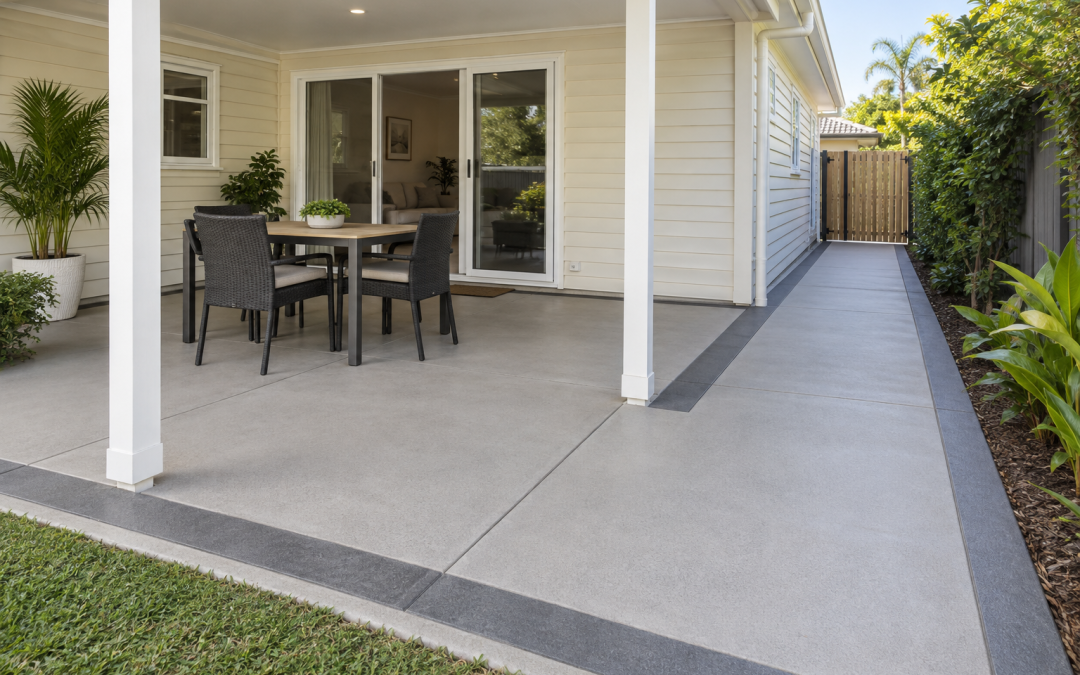
A tired patio can make an otherwise welcoming outdoor area feel unfinished. The problem often extends beyond the entertaining space: a side path has a different finish, the step outside the laundry looks worn, and several small concrete areas compete for attention. Planning them together can create a more considered result than treating each patch as a separate project.
For homeowners considering concrete resurfacing in Wynnum, the first question is how these areas function as one space. HILT Concrete Resurfacing can assess suitable existing concrete and discuss a finish that works with the property. A useful brief explains the routes people take, the surfaces that need attention and the practical limits around doors, drainage and access.
Map the routes you use every day
Start with a simple sketch of the outdoor area. Mark the kitchen or living-room door, laundry exit, side gate, garden access and any steps. Then draw the routes used for carrying washing, taking bins out, bringing groceries inside or moving between the house and outdoor table.
This exercise often changes the scope. A patio may look like the obvious priority, but the narrow connecting path may receive more everyday traffic. A coordinated project can include both, subject to the condition of each slab. Mark anything that must remain accessible during the work, especially if the side passage is the only route to another part of the property.
Have each section assessed on its own merits
Two concrete areas beside one another may have different histories. One may have an old coating, another may be bare, and a third may have repairs or visible movement. Their appearance does not tell the whole story. Ask for an assessment of each section before assuming they can all receive the same preparation and finish.
Decorative resurfacing is not a structural repair. Significant cracking, movement or drainage problems may need other work before a new finish is suitable. Existing cracks can also show through decorative coatings. Be clear about where water gathers and which defects have changed, rather than asking for everything to be hidden beneath a fresh colour.
HILT's concrete resurfacing service in Wynnum covers existing outdoor surfaces where the underlying concrete is suitable. An on-site discussion helps establish where resurfacing makes sense and where a different solution needs consideration.
Pay attention to doorways, steps and edges
Walk through the area with doors and gates in mind. Show the contractor low door clearances, sliding-door tracks, drainage grates, step edges and places where concrete meets another material. These junctions deserve attention before work starts, particularly where several surfaces meet in a small space.
Ask how the proposed finish will meet each boundary and which existing joints will remain visible. A neat overall colour scheme does not require every line in the concrete to disappear. The treatment needs to suit the surface and its function, with important details assessed rather than covered for appearance alone.
If you are also changing a gate, installing a new door or arranging other outdoor work, explain the sequence early. Resolving those plans before resurfacing can help avoid later trades cutting, drilling or moving equipment across a newly finished area.
Choose a consistent palette, then vary the details thoughtfully
A connected patio and path do not have to look identical in every respect. A restrained main colour can tie them together, while a border or subtle change in pattern defines the entertaining area. Keep the design simple enough that steps, edges and transitions remain easy to recognise.
Look at samples beside the house, not only on a phone screen. Brickwork, painted walls, fencing and outdoor furniture all influence how a colour reads. Compare the sample in sun and shade where possible, and ask which options suit the selected coating system and the actual use of the space.
HILT offers decorative concrete resurfacing as well as other resurfacing services. Discuss texture and wet-weather use alongside appearance. A finish should be selected for its location; describing a surface as slip-resistant is not a guarantee that nobody can slip on it.
Make room for furniture without losing the walkway
Before choosing a decorative layout, mark where the outdoor table, barbecue and larger pots will sit. Allow for chairs being pulled out and for someone to walk past while others are seated. A border that looks balanced on an empty patio may end up hidden under furniture once the area is back in use.
Consider the practical storage plan too. Heavy planters, outdoor cupboards and bulky furniture need somewhere to go during the work. Decide who will move them and whether anything requires separate help. Tell HILT about fixed items and connections rather than assuming everything can simply be shifted on the day.
Photographs of the normal furniture arrangement are useful at the quote stage. They show how the area is lived in and help explain why particular edges or access routes matter to you.
Plan the work around household access and weather
Ask which areas will be unavailable at each stage and agree on a safe alternative route where one is needed. Include children, pets, visitors and deliveries in the plan. A side gate used only occasionally can become important when the usual back door opens directly onto the work area.
Completion of application and return to normal use are separate milestones. Preparation, coating and sealing requirements depend on the chosen system, the surface and weather conditions. Obtain instructions for when people, furniture and other loads can return. Do not transfer a curing time from a different product or another household's project.
Allow flexibility if the weather changes, and avoid organising an outdoor gathering immediately after the proposed finish date. Ask when the schedule will be confirmed and how changes will be communicated. A practical access plan makes a short interruption easier to manage.
Frequently asked questions
Can a patio and side path be resurfaced together?
They can be considered as one project, but each area needs assessment. Different coatings, repairs or slab conditions may require different preparation. Discuss the full area at the quote stage so the scope is clear.
Will resurfacing fix water pooling near the house?
Do not assume it will. Explain the pooling and have the cause assessed before choosing a decorative finish. Drainage or level issues may require separate work, and coating over the surface does not establish that the underlying problem is resolved.
Do I need to remove all outdoor furniture?
The work area needs to be available as agreed with the contractor. Confirm what must be moved, who will move it and where it can be stored. Identify heavy or fixed items early so they are included in the planning conversation.
Can the new finish match an existing concrete area?
A complementary finish may be more realistic than an exact match. Existing surfaces change with age and exposure, while colour and texture vary between systems. Review samples and agree on the intended result before work begins.
Discuss your Wynnum patio and pathway project
Based in Wynnum, HILT Concrete Resurfacing helps Brisbane homeowners refresh suitable concrete with resurfacing, decorative finishes and sealing. Bring your sketch, photographs and a short list of access needs to the initial discussion. Contact HILT for a free quote or call 0490 485 028 to plan a patio and pathway makeover around the way your household uses the space.